Many people dream of starting their own business. Being your own boss, turning your passion into a source of income and working on something that is truly your own sounds appealing to many.
Nevertheless, many aspiring entrepreneurs put their plans on hold because they think they need thousands of euros to get started.
Fortunately, that is by no means always the case these days.
Thanks to digitalisation, online services and flexible ways of working, it is possible to build a successful business on a limited budget.
That doesn’t mean you won’t have any costs at all, because in Belgium there are a number of legal and administrative obligations that every start-up must take into account.
But you certainly don’t need a large amount of start-up capital to find your first customers.
In this guide, you’ll discover how to start your own business with as little investment as possible, which costs you can avoid, where you shouldn’t cut corners, and how to grow your business professionally.
The short answer is: almost.
In practice, it’s virtually impossible to set up a business completely free of charge. There are always certain costs that you cannot avoid. These include, for example, registering your business, social security contributions or a professional website.
However, that doesn’t mean you need thousands of euros.
Many freelancers, consultants and online entrepreneurs are starting out today with less than €1,000.
Some even start out with just a few hundred euros, depending on their line of work.
The difference lies not in how much money you have, but in how wisely you make your initial investments.
When you set up a business in Belgium, you will usually have to deal with a number of fixed costs.
Some examples are:
These costs vary depending on the type of business and the nature of its activities, but they usually account for only a small proportion of what many people expect.
Not every business requires the same level of investment. Some business models are particularly well-suited to start-ups with a limited budget.
Are you good at writing, programming, marketing, design, photography or administration? If so, you can often get started straight away with just a computer and an internet connection.
Some examples are:
In this case, your knowledge is your greatest investment.
Online services also involve low set-up costs.
Take, for example:
As you do not need to buy stock, your fixed costs remain low.
Would you like to sell products? If so, you don’t necessarily have to spend thousands of euros on stock.
Popular models include:
Although these models are relatively inexpensive to start with, they do require a well-thought-out marketing strategy.
Local services, too, can often be set up with limited resources.
For example:
You’ll often already have most of the materials you need.
Many start-ups make the mistake of immediately renting an office, buying expensive software or making major investments before they have secured their first client.
So first ask yourself:
The lower your monthly costs are, the easier it is for your business to become profitable.
A business plan does not have to be a document running to dozens of pages.
Simply answer these questions:
This provides direction for your business and helps you avoid unnecessary expenditure.
If you want to start your business officially, your paperwork must be in order.
These include, for example:
Good preparation prevents problems later on.
Even if you’re starting out on a tight budget, you’ll want to project confidence.
Therefore, please ensure that:
Customers often form an opinion of your business within a matter of seconds. A professional first impression therefore makes a big difference.
Many start-ups initially use their home address as their official business address. This may seem like a logical choice, but it also has a number of drawbacks.
Your address may appear in official registers, which could compromise your privacy. Furthermore, a professional business address inspires greater confidence in customers, suppliers and business partners.
A virtual office offers an interesting solution to this.
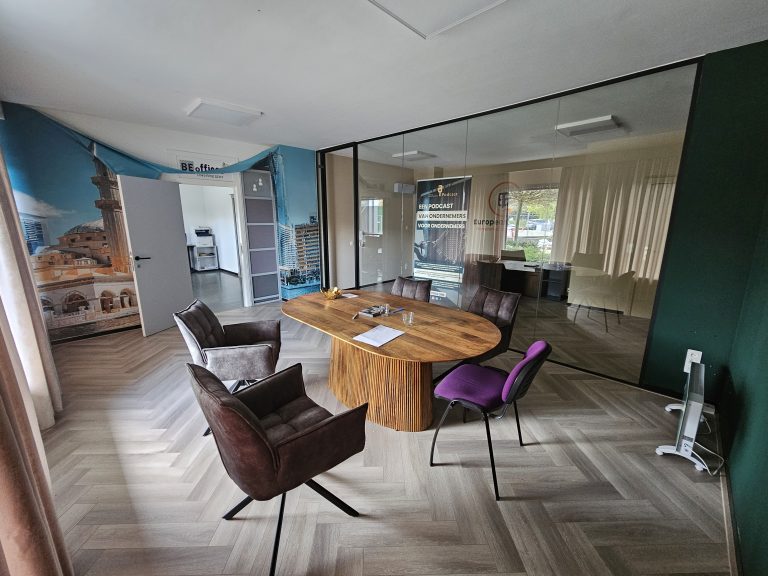
At BE Offices, you have access to a professional business address in Belgium without the costs associated with a traditional office.
This way, you can keep your start-up costs low whilst still presenting a professional image.
For many new entrepreneurs, this is a simple way to make a reliable impression right from day one.
Not every expense is necessary during the first few months.
You can often save money on:
It is better to invest first in areas that directly help attract new customers.
Although saving money is important, there are some investments that are almost always worth making.
Your website is often the first point of contact with potential customers. A well-designed website inspires confidence and helps you to be found via search engines.
An experienced accountant not only helps you to avoid mistakes, but can also advise you on tax benefits and administrative obligations.
Even the best product won’t sell itself. Make sure potential customers know your business exists.
Many entrepreneurs want to set up a perfect business straight away. It’s better to start small and improve step by step.
Don’t wait until everything is perfect. Start networking and talking to potential customers early on.
A large loan does not automatically mean greater success. Many successful businesses have grown on the back of their initial revenue.
Even if you don’t invest much, it’s wise to have a small reserve to cover any unexpected costs.
Here are a few simple ways to keep your costs down:
Yes, depending on your business. Please bear in mind, however, that there are almost always some administrative costs involved.
For many freelancers or service providers, a few hundred euros is enough to get started. Other businesses, of course, require a larger investment.
Yes. Many self-employed people start their businesses from home. If you would prefer not to use your home address as your official business address, a professional business address could be an attractive alternative.
No. Many entrepreneurs have been working successfully from home for years or make use of flexible office solutions when necessary.
Not always, but it does help you to set realistic goals and make better financial decisions.
Starting your own business without any money may not be possible in the strictest sense, but you certainly don’t need a large amount of start-up capital to become a successful entrepreneur.
By making a smart choice to adopt a business model with low fixed costs, keeping your expenditure under control and growing step by step, you can lay a strong foundation for the future.
A professional appearance plays an important role in this.
With a business address, flexible office solutions and additional services, BE Offices helps start-up entrepreneurs get off to a professional start without the high costs of a traditional office.
This allows you to focus entirely on what really matters: growing your business.