One thing you know for sure: you want to become self-employed.
Perhaps you’ve been dreaming of greater freedom for years. Perhaps you want to be your own boss, pursue your passion, or simply build something you can be proud of.
Yet one question keeps going round and round in your head:
“I want to become self-employed, but I don’t know what to do.”
If that sounds familiar, you’re certainly not the only one.
Many budding entrepreneurs get stuck at exactly the same point. They know they want to start a business, but have no idea which direction to take.
Some people wait months or even years for the perfect business idea. Others see so many possibilities that they end up not making a choice at all.
The good news? You don’t need to have the perfect idea just yet.
After all, most successful businesses do not arise from a single stroke of genius.
They started small. With a skill, a hobby, a problem that could be solved, or simply their first customer who needed help.
In this article, you’ll find out how to choose a business that suits you, which sectors offer opportunities today, and how to avoid getting stuck in indecision without ever taking the first step.
Twenty years ago, the opportunities for becoming self-employed were much more limited.
These days, you can set up an online shop, become a freelancer, offer online services, open a local business, sell products via marketplaces, or even work entirely remotely for clients all over the world.
More choice may seem like a good thing, but it also has a downside.
The more options there are, the harder it becomes to make a decision.
As a result, many people think:
That is understandable, but also dangerous.
Because whilst you carry on searching for the perfect idea, others are gaining experience, making mistakes and gradually moving forward.
The truth is that there is rarely just one perfect choice.
Above all, there are good ideas that get even better because entrepreneurs keep working on them every day.
When people are looking for inspiration, they often open Google and type in search terms such as:
That seems logical, but in fact, entrepreneurship doesn’t start with an idea.
It starts with you.
So first ask yourself:
People often underestimate how much value they can already offer.
Perhaps you’ve been working in administration, marketing, engineering, logistics or IT for years. Perhaps you’re good with computers, speak several languages or regularly help friends with their tax returns, websites or social media.
These are all skills that will help you build a business.
There’s no need to reinvent the wheel.
Customers are not usually looking for a revolutionary idea.
They’re looking for someone who can solve their problem effectively.
One of the biggest misconceptions about entrepreneurship is that successful entrepreneurs all started out with a brilliant idea.
In reality, that is rarely the case.
Many well-known companies started out with a simple service that later grew into something much bigger.
So the first version of your business doesn’t have to be the final one.
In fact, there’s a good chance that your business will look completely different in five years’ time compared to today.
Those who keep waiting for perfection often never get started.
You learn as you go.
And those who learn will naturally discover where the greatest opportunities lie.
A better question than:
“What can I sell?”
is:
“What problem can I solve?”
That may seem like a minor difference, but it changes the way you view business.
After all, people rarely buy a product simply because it looks nice.
They are buying a solution.
An entrepreneur who is short of time hires administrative support.
A restaurant is launching a new website to attract more bookings.
An online shop invests in SEO to attract more visitors.
A family hires a cleaning company because they don’t have enough time themselves.
An entrepreneur starting out chooses a business address because he does not want to disclose his home address.
When you focus on problems rather than products, it becomes much easier to spot opportunities.
So why not ask yourself:
What frustrations do I regularly hear people expressing?
That’s often where the best business ideas come from.
You’ve probably heard this advice dozens of times already:
“Just follow your passion.”
That sounds nice, but it’s not always realistic.
Passion alone doesn’t pay the bills.
Conversely, you don’t have to be in love with your job to build a successful business.
Many entrepreneurs started out doing something they were simply good at.
It was only when they started getting customers that their enthusiasm grew naturally.
A successful business is usually at the intersection of three factors:
When these three elements come together, you have a solid foundation on which to build a sustainable business.
No sector can guarantee success.
Nevertheless, there are markets where demand has grown significantly in recent years and where there will continue to be plenty of opportunities in the years to come.
Some examples are:
Of course, that doesn’t mean you should focus exclusively on these sectors.
Traditional professions also remain attractive if you deliver quality and know how to stand out from the competition.
Below are fifteen popular business ideas. They may not all be suitable for everyone, but they can help you discover which direction best suits your experience, interests and ambitions.
Freelancing is one of the easiest ways to become self-employed. Especially if you already have a few years’ work experience.
Did you work in marketing, administration, accountancy, HR, photography, translation or IT, for example? If so, you can offer your expertise directly to businesses.
The main advantage is that you usually need very little start-up capital. Often, all you need is a laptop, a professional website and a few initial clients to get your business off the ground.
What’s more, you can start small – for example, as a self-employed person working part-time – and decide later whether you want to become fully self-employed.
Online shopping continues to grow, and this is creating a steady stream of new opportunities for entrepreneurs.
You can develop your own products, collaborate with suppliers, import products or cater to a specialised niche.
It is important not to simply sell “everything”, but to choose a clear target audience. An online shop that focuses on a single specific market often has a better chance of success than a general online shop.
Do bear in mind, however, that an online shop does not attract customers automatically. Good SEO, online advertising and strong customer service all play an important role.
Have you built up years of experience in a particular sector?
In that case, consultancy might be an interesting option.
Companies are happy to pay for specialist knowledge that enables them to achieve results more quickly or avoid costly mistakes.
This could relate to finance, HR, marketing, production, logistics, IT or virtually any other sector in which you have built up expertise.
As a consultant, you’re not so much selling your time as your experience and insights.
More and more people are investing in personal coaching.
This could relate to sport, nutrition, career development, personal growth, entrepreneurship or business skills.
If you enjoy working with people and helping others to achieve their goals, coaching could be an interesting career path.
Do make sure you specialise clearly. A coach who focuses on one specific target group is usually more likely to stand out than someone who “helps everyone”.
A cleaning company has been one of the most popular businesses to set up for years.
Demand remains high, both from private individuals and businesses.
What’s more, you can start on a relatively small scale and expand your operations later by taking on extra staff or offering additional services.
Those who deliver reliable work and have satisfied customers often build a stable business thanks to word-of-mouth recommendations.
Are you good with your hands and do you enjoy working with them? If so, odd jobs, painting, garden maintenance or small-scale renovations might be an interesting option for you.
The demand for reliable tradespeople remains high. Many private individuals and businesses are looking for someone who delivers high-quality work, honours their commitments and communicates clearly.
You can start small here too. As your customer base grows, you can invest in additional equipment or staff.
More and more companies are realising that a strong online presence is essential.
However, many business owners do not have the time or the expertise to get to grips with SEO, Google Ads, social media or email marketing themselves.
Do you have experience in any of these fields? If so, you can offer your services to local businesses or clients throughout Belgium and even beyond.
The great thing about digital marketing is that you can do most of your work online. This means you’re not tied to a single region and can gradually expand your customer base.
Many self-employed people and small businesses outsource administrative tasks in order to free up time for their own business activities.
As a virtual assistant, you can, for example, help with:
This activity requires little investment and can easily be carried out from home.
Nowadays, virtually every business needs a professional website.
Yet there are still thousands of businesses that have an outdated website or no online presence at all.
Do you have experience with WordPress, web design or web development? If so, you can offer a service for which there is still high demand.
As well as building websites, you can also offer maintenance, hosting, security and SEO services. This allows you to generate recurring income rather than just one-off projects.
Not every business owner enjoys doing the paperwork.
In fact, for many self-employed people, it is one of the least favourite aspects of their work.
If you are detail-oriented and have administrative experience, you can support companies with tasks such as preparing quotations, invoicing, scheduling and document management.
This makes this activity appealing to those who work in an organised manner and enjoy providing support behind the scenes.
Online courses are more popular than ever.
Do you have expertise in a particular subject? If so, you can share it through online lessons, webinars or one-to-one coaching.
This could relate to languages, music, software, photography, accountancy, marketing or virtually any other field.
More and more people are willing to pay for practical knowledge that helps them achieve results more quickly.
More and more companies are investing in videos, blogs, newsletters and social media.
Do you have a talent for writing, filmmaking, photography or content creation? If so, you could develop your skills to become a content creator or offer your services to businesses.
It may take some time before you build up a stable income, but with a clear niche and consistent quality, there are certainly opportunities.
Logos, brochures, packaging, advertisements and corporate identities remain important for businesses.
If you’re creative and have experience with graphic design software, you could become a freelance designer.
Many graphic designers combine different services, such as branding, web design and social media visuals. This allows them to expand their range of services and increase their income.
It is not just online shops that are growing. Businesses that sell online are also increasingly in need of support.
For example, you can help them with:
This means you don’t have to sell any products yourself, but you do benefit from the growth of e-commerce.
Perhaps you enjoy photography, baking cakes, making furniture, or are passionate about sport.
A hobby can develop into a successful business, provided there is sufficient demand for it.
So try not just to focus on what you enjoy, but also on the value you can create for others.
A hobby only becomes a business when customers are willing to pay for it.
After considering all these ideas, you may still be wondering which is the best option.
That’s normal.
You should therefore use the four questions below as a guide.
The bigger the problem you solve, the more likely people are to be willing to pay for it.
Ask yourself:
“Why would anyone become a customer?”
If you don’t have a clear answer to that, it might be time to flesh out your idea further.
A good idea without customers remains just an idea.
So take a look at:
Competition isn’t always a bad thing.
On the contrary.
She often demonstrates that there is a market for it.
Not every business is right for every entrepreneur.
Do you enjoy working with people?
Or would you prefer to work independently at a computer?
Would you like to be out and about every day?
Or would you prefer to work from home?
The better your business reflects your personality, the more likely you are to enjoy it for years to come.
Many entrepreneurs think they have to invest thousands of euros straight away.
That isn’t necessary.
On the contrary.
Most successful companies started out small.
By testing your idea on a small scale first, you’ll learn more quickly what works, whilst at the same time limiting your financial risk.
Every entrepreneur makes mistakes.
Nevertheless, there are a few pitfalls that you can easily avoid.
Many people keep looking for the perfect moment.
But that moment rarely comes of its own accord.
The best way to learn about entrepreneurship is simply to get started.
Don’t start with ten different services.
Focus on one specific activity first, and then take it slowly as you build on that.
If you try to appeal to everyone, you end up not really appealing to anyone.
A clearly defined target audience makes your marketing both simpler and more effective.
Even if you’re just starting out, customers expect professionalism.
A well-designed website, a professional email address and an official business address immediately inspire greater confidence.
When you decide to actually set up your business, there are a few practical matters to consider.
Depending on your situation, you should consider, amongst other things:
Don’t let this put you off.
These administrative procedures are usually sorted out more quickly than many start-ups realise.
A business can only grow if you find customers.
Fortunately, you don’t need a large marketing budget to do that.
Many start-ups find their first customers through:
Invest in your online visibility right from the start.
Many potential customers search online first before getting in touch.
If you’re easy to find and come across as professional, you’ll significantly increase your chances of securing new assignments.
Many entrepreneurs start their businesses from home.
That’s practical, but it also means that your home address is often made public when you register your business.
That is why more and more start-ups are opting for a business address.
A professional business address offers a number of advantages:
For many self-employed people, this is a simple way to get off to a professional start from day one.
Work through the checklist below.
Once you’ve ticked off most of the items, you’re ready to move on to the next step.
Yes. Experience helps, but it is not an absolute requirement. What is more important is that you are willing to keep learning and to provide value to your customers.
Yes. Many entrepreneurs start by building up their business alongside a full-time job. This allows you to minimise the financial risk whilst gaining experience.
That depends entirely on the type of work. Some freelancers can get started with just a laptop and an internet connection, whilst other businesses require a greater investment.
No. Many successful businesses do not do anything entirely new. They set themselves apart through better service, higher quality or a clear specialisation.
Not always. Would you prefer not to use your home address, or would you like to project a more professional image? If so, a business address could be a good solution.
The first step towards entrepreneurship does not begin with a perfect idea, but with the decision to take action.
You don’t need to have all the answers just yet. Many successful entrepreneurs started out with a single service, a single customer and a simple plan. By gaining experience and continuing to improve, their venture grew, step by step, into a successful business.
When you’re ready to officially launch your business, a professional foundation is just as important as a good idea.
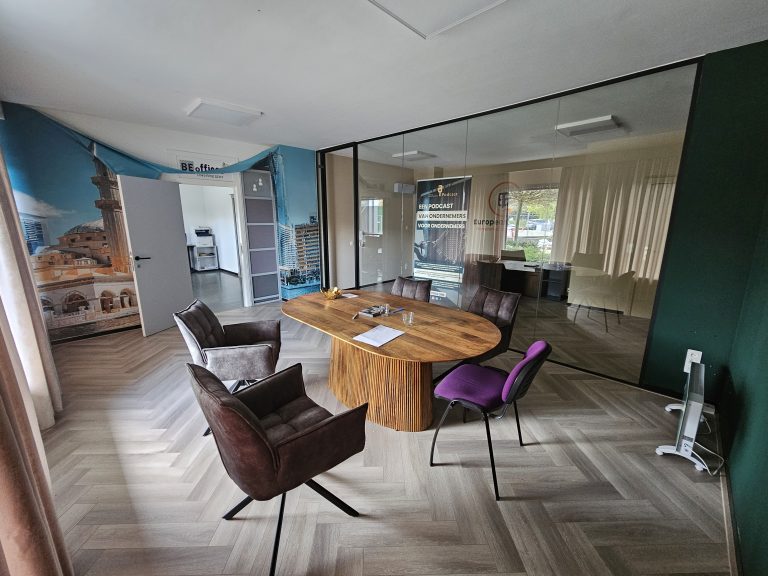
At BE Offices Every day, we support new entrepreneurs with a professional business address in Antwerp. This way, you can protect your privacy, project an image of reliability from day one, and have an official business address for your company.
Are you wondering which package is best suited to your business? Please feel free to get in touch with us. We’d be happy to help you get off to a professional start.